Pink Fire Pointer Unique
Showing posts with label England. Show all posts

English Country in the City


Have you seen British style-writer and interior designer Rita Konig's New York apartment in The Selby? (Rita is the current T Magazine and former Domino editor.) It is a little piece of heaven. She has turned a small West Village apartment into a sort of "Jane Austen meets modern day magazine editor's" cozy retreat. It feels like a country cottage in the midst of New York City. And how smart, since I can imagine that if you lived in New York, nothing would feel better than coming home to a soothing and enthralling oasis after a day in the city. I am smitten!


Her apartment feels fresh and at the same time evokes a strong feeling of home. Like a little house with a country feel in the middle of the city.


In an interview for New York Magazine, Rita said that the fireplace and the windows were the reason she took the apartment. She goes on to say, "I have always liked decorating my small apartments as though they are just a few of the rooms in a much larger house, so you have the feeling that you could, should you want to, wander off to the drawing room, library, dining room, but for the moment are just choosing to be in this rather cozy study."


The prettiest room is the bedroom. Feminine and romantic, it would be like sleeping in a little garden.  


I love Rita Konig's design philosophy. She says (from the interview above), "You just have to be able to sink back at home. If there aren't comfortable chairs or a sofa, you are sunk. I am more interested in that, really, than the trim on the curtains. Sitting and chatting is what I really like most of all in the whole world."

I couldn't agree with her more. The most inviting homes are a personal narrative of the way people live, a reflection of who they are. Books, art, travel souvenirs, and family heirlooms give a cozy and lived-in look to a home. I once heard a decorator say that rooms should be collected not decorated. I think Rita Konig has accomplished that goal and created a home that is warm and welcoming. 

To see the full tour of Rita Konig's apartment, go here.

Call The Midwife


Have you been watching the wonderful show Call The Midwife that airs Sunday nights on PBS?  I am crazy about it and each time it opens with Vanessa Redgrave's voice narrating the story, I get a little emotional. Most episodes I am in tears by the end. Last week's was especially poignant as it juxtaposed a story about the general good health of babies born in the fifties with the issue of the unavailability of birth control and women having as many as 10 children while living in poverty.

The midwives, along with the nuns of Nonnatus House, provide free and safe maternity care to the impoverished women living in London in the 1950's. They deliver babies among the slums and dockyards of London's East End. They live along side the nuns at the convent and the relationships between the nuns and these modern girls are the heart of the show. They watch out for and respect each other, learning precious life lessons along the way. Their meals together around the big table in the convent's kitchen is a highlight of the show. As is the vision of the girls and the nuns making their rounds on bicycles wearing their prim uniforms with red cardigans and nurse's caps.


I recently read that writer and producer Heidi Thomas almost passed on this project, but after reading Jennifer Worth's memoirs, upon which the show is based, she was powerfully moved by the stories of the midwives, nuns, young women and mothers all living together in this part of London and the problems they all faced. She realized that the universal theme of childbirth with its inherent dangers as well as joys would be a powerful one and make fascinating viewing. She was right.

********


If you want to be further immersed in this era of London during the 1950's, be sure to watch The  Bletchley Circle that is currently airing as part of Masterpiece Theatre. (Have you noticed the high quality of so many of the dramas on television right now? There seems to always be something good to watch.) The lead characters are four women who worked together during WW II in the espionage department of the government cracking enemy codes. After the war, they turn their analytical skills into solving murder mysteries in London in 1952. This show is fabulous!

********

And if you would like to round out your picture of London in the fifties even more, throw in a Barbara Pym novel. I am happily rereading my favorite Excellent Women and adoring the story of the central character Mildred Lathbury and all her adventures in the little world she inhabits in London at this time. A clergyman's daughter and a spinster living in London, her life is shaken up by her glamorous new neighbors and unexpected developments for the vicar next door. She tells the story with humor and insight. Her world may be small, but her observations about human nature are universal. 

Looking Forward To...

February can be a cold and dreary month, but there are so many things to look forward to.
Here are a few that should make staying in much more fun.

Television to watch:

Anglophiles can rejoice.  If you are like me and can't get enough of British costume dramas or British actors such as Benedict Cumberbatch, you will be happy to know that just as we say good-bye to "Downton Abbey," another costume drama from Britain arrives this week.  

Rebecca Hall and Benedict Cumberbatch

Parade's End is a sumptuous five-part mini-series co-produced by HBO and BBC that is based on a quartet of novels written by the British writer Ford Maddox Ford.  The series of books, which are back in print from Vintage, is about Britons during the First World War.  They have been adapted for television by the playwright Tom Stoppard.  The story follows the character Christopher Tietjens (played by Cumberbatch), heir to the estate of Groby.  He goes from a government worker to an officer in France during the war.  The show has already been seen in Britain and reviewers have called it witty, literary and classy.  It takes us back to Edwardian England and features period fashions, grand homes and the beautiful English countryside.  There is a love triangle, incredible performances by the three leading actors, and great dialogue written by Stoppard.  I read that this production brilliantly captures the London of the 1920's. It airs on HBO and begins Tuesday night.  The cast includes Benedict Cumberbatch ( I can't get enough of him -- he was so good in Sherlock), Rebecca Hall, Adelaide Clemens (the three leads), Rupert Everett, Miranda Richardson, Jack Huston and Janet McTeer.  People are calling it "the thinking man's Downton."  Can't wait to see this one!


Jeremy Irons discussing "Henry IV" and "Henry V" on the stage of the Globe Theatre in London

And speaking of literary inspiration from England, the new series Shakespeare Uncovered sounds fascinating.  It has been airing on PBS throughout the month of February.  (I have recorded it and am looking forward to watching all the episodes.)  The series features actors and directors, such as Jeremy Irons, Derek Jacobi, and Trevor Nunn, talking about how some of the great works by Shakespeare have been interpreted over the years.  They also talk about the challenges of performing and directing the central roles.  I read that the episode with David Tennant on "Hamlet" (he played the title role with the Royal Shakespeare Company) is especially good.  I did watch a clip from that episode with Tennant discussing how the character Hamlet (and the audience) knows from the moment in the play that Hamlet agrees to avenge his father's death he is a dead man.  That kind of action can result only in the character's death.  I had the chills listening to him...

As a passionate Shakespeare fan, I love a program that celebrates Shakespeare's plays and continues a discussion that has been going on for more than four hundred years old.  The fascination with Shakespeare is endless and his plays continue to captivate us.  This series about some of the most important plays should be enlightening and offer fresh insight into how actors and directors approach them.  By the way, have you been to the Globe Theatre in London to see a Shakespeare production?  If you are in London, a visit to the Globe Theatre is very special.  I saw a production of "Much Ado About Nothing" at the Globe and it was thrilling.


Art to see:


Vermeer's "The Girl with the Pearl Earring" is currently in an exhibition at the De Young Museum in San Francisco.  This is your chance to see this exquisite painting up close and is definitely worth a trip to San Francisco.  When it leaves the U.S., it will return to its home at the Royal Picture Gallery Mauritshuis in the Netherlands.


Books to read:


Because this year is the 200th anniversary of "Pride and Prejudice," there will be new books on Jane Austen.  This one by Paula Byrne has gotten great reviews and sounds excellent.


P.G. Wodehouse:  A Life In Letters
Edited by Sophie Ratcliffe

The letters of the beloved British writer P.G. Wodehouse have been collected in a new book.  Letters can give us a vivid portrait of the writer and I am looking forward to learning more about P.G. Wodehouse, the comic genius who gave us Jeeves and Wooster.


Nancy: The Story of Lady Astor by Adrian Fort

I can't wait to read this new biography of Nancy Astor, the American divorcee who moved to London in 1904, married the very wealthy American Waldorf Astor, and became the first woman member of the British parliament in 1919.  She remained in parliament for the next 26 years.  What a woman!


 The end of February, beginning of March is the last part of winter.  It is a perfect time to sink into some good books, watch some compelling British television, and maybe see a Dutch masterpiece.  After San Francisco, "The Girl with the Pearl Earring" travels to Atlanta, and then to the Frick Museum in New York before returning to Europe.


Photo one via here, photo two via here, photo three via here, photo four via here, photo five via here, photo six via here   

Miss Potter

Beatrix Potter's Hill Top Farm in the Lake District of England

The Morgan Library and Museum is one of my favorite spots in New York City.  It is truly one of the city's treasures. Whenever I am in NYC, I make a point to visit it and I am never disappointed.  There is always something special to see.  Quiet and serene, it is filled with illuminated, historical and literary manuscripts, early printed books, and old master paintings and prints.  The Morgan began as the private library of financier Pierpont Morgan and was built between 1902 and 1906 adjacent to his New York residence at Madison Avenue and 36th Street.  After his death, his son J.P. Morgan transformed the library into a pubic institution, making its treasures available to the public.  It is a place to celebrate imagination and creativity.  Once you enter the doors, you are immersed in the words of great writers throughout the centuries.  It is almost as if they are speaking to us.

The Morgan is well-known for its fantastic exhibitions.  A couple of years ago I saw an excellent one on Jane Austen which I wrote about here.   The exhibitions are often of letters and hand-written manuscripts by famous authors.  Looking at these original creations in the author's own handwriting gives the viewer a physical sense of the writer.   If I were there this month, I would make a point of seeing the exhibition, "Beatrix Potter: The Picture Letters."  It looks fabulous.

  Letter written by Beatrix Potter to five-year-old Noel Moore, 1895

This exhibition shows how Beatrix Potter, the Edwardian artist and children's book writer, used a series of private letters to develop some of the most famous animal characters in all of children's literature.  Her former governess Annie Moore was one of her best friends and for years Potter wrote charming picture letters to Annie's children about the many pets that she kept.  This exhibition brings together for the first time twenty-two of her picture letters to children of family and friends which contain the beginnings of her celebrated books.  The most famous example is "The Tale of Peter Rabbit," which began as an eight-page letter (see above) to Noel Moore, the five-year-old son of Annie Moore.  Annie Moore persuaded Potter to take back the letter, copy it out, and revise it for publication.  At least six publishers rejected the book, but Frederick Warne & Company finally took it on.  And it was a huge success when the first trade edition finally appeared in 1902.  More than 40 million copies of "The Tale of Peter Rabbit" have been sold since it was published 110 years ago.

Renee Zellweger in the film "Miss Potter" of 2007

You probably remember the movie Miss Potter of a few years ago.  It showed Beatrix Potter as a young woman who loved nature and the English countryside.  I remember being inspired by the story of how she developed as an artist and her skill at capturing and memorializing so many creatures in nature.  It was her playful imagination that gave them a fictional identity.  After earning enough money from her books to buy Hill Top Farm in the English Lake District, she went on to purchase acres of unspoiled land and estates.  She became a conservationist and was dedicated to preserving the natural world.  When she died in 1943, she left 4,000 acres to the National Trust in Britain.

By the way, do you remember the television mini-series The Tale of Beatrix Potter that aired on Masterpiece Theatre in 1984?  It starred a young Penelope Wilton (she plays Matthew Crawley's mother on Downton Abbey) as Beatrix Potter.

This exhibition will make you think about the golden age of letter writing when writers took the time each day to write leisurely letters to family and friends.  Beatrix Potter's letters to her young friends were playful and charming.  They were unique because they included art work to illustrate whatever tale she was writing about.  It was as if she were sitting down and telling her young friends a story.  As it turns out, the stories and their illustrations were the genesis of the famous Peter Rabbit books which include the tales of Peter Rabbit, Squirrel Nutkin, Benjamin Bunny and others. Her books retained the simple joy and playful tone of her impromptu letters and this was the secret of her success. She was also a talented artist of the natural world and this exhibition highlights her art work and her career as a naturalist.  Aren't we lucky to be able to see the beginning of her amazing career?

If you miss the exhibition, you can view it online.

Downton Abbey, Season Three


Wasn't it wonderful?

There were so many poignant moments.  Here are three that made me choke up:
 
When Matthew asked Tom Branson to be his best man.
When Carson and Lord Grantham watched Lady Mary walk down the stairs in her wedding gown.  The look on Carson's face...
And when Matthew visited Lady Mary's bedroom the night before the wedding to apologize (quoting Branson's romantic line that as long as she walks the earth he will never find anyone else) and she made him close his eyes before entering the room and kissing her.

Did you know that Sunday night's episode had a record-breaking audience?  The producers of "Masterpiece" had predicted that the audience for the first episode of Season Three would be bigger than last time, but apparently no one was prepared for the actual number.  Read here to find out more.

This chilly January weekend should be a great one to catch up on a few of the Oscar nominated films, watch the Golden Globes, and enjoy the second episode of "Downton Abbey."

Wishing you a lovely weekend!

Photo via here  

A Downton Abbey Weekend

Photo via here

Are you ready?  Season three of "Downton Abbey" begins this Sunday on PBS.  Some people are having "Downton Abbey" parties, others are getting ready by rewatching seasons one and two, and some will be staying home and watching it in their pajamas.  (That will probably be me.)  But no matter how we choose to watch the first episode of the new season, I think most fans are in a celebratory mood.

Just like last year, the holidays are over and the new year is beginning with another season of this delicious and addictive period drama.  During the cold winter months when we want to stay home and curl up with a good novel or a good television show, "Downton Abbey" combine the best of both worlds.  The leisurely episodic format of the show makes us feel as if we are immersed in a sprawling Edwardian novel.  The characters are multilayered, their relationships provide many poignant moments, and the evocation of a vanishing lifestyle is beautifully rendered.  The story is anchored in history and as we watch it unfold we see how the events affect the characters' lives.  We are watching life as it existed one hundred years ago.  The show started with the sinking of the Titanic and will probably take us right up to World War II.  This season promises stories about women's suffrage and the social revolution that occurred in the twenties and thirties.

Here are  few things that we can look forward to in season three:

There will be a wedding -- Lady Mary and Matthew's.
Lady Mary's grandmother -- Lady Grantham's mother, played by Shirley MacClaine -- will come to Downton for the big event.
The costumes will be more glamorous than last season, according to the show's new costume designer Caroline McCall  She has said that the new season sees the onset of the Roaring 20's and that the costumes will reflect the fashions of the time.

The new costumes will be just one element of the show's overall beauty.  And it is a beauty of a show;  the sumptuous sets and beautiful English countryside are very easy on the eyes.  The show is a dream  for anglophiles (I can relate to this) who like nothing better than a family saga that unfolds within a magnificent English country house.

A romantic and elegant costume drama is great escapist entertainment.  From the reviews of season three that have appeared in the British newspapers, it looks as if we have a wonderful January and February ahead of us.  Fans of the show can once again look forward to Sunday nights at Downton Abbey.  Enjoy!

A Dickens of a Year


Did you know that Charles Dickens wrote "A Christmas Carol" in six weeks, under pressure to get it finished before Christmas?  It was 1843 and Dickens was experiencing falling sales and diminished interest in his last two books.  He was filled with self-doubt, short of cash, and not too happy that his wife was expecting their fifth child after only seven years of marriage.  He had travelled to Manchester to give a speech on the lack of education for the poor and other problems plaguing the city.   Manchester reminded Dickens of many of the social ills that plagued England at the time. Everywhere he looked, there was poverty, hunger, filth and unemployment.  In 1843 fifty-seven percent of children born to working-class parents in Manchester died before they reached the age of five.  As many as 3.000 people per day lined up at soup kitchens and crowds of unemployed working men stood idle on the streets.  Dickens delivered his speech at the Manchester Athenaeum, an institution that provided education for the working poor.  He was encouraged by the audience's warm reception and left the Athenaeum filled with new hope about his writing future.

That night he walked the streets of Manchester thinking about his writing and realized that he needed to work on maintaining the strong qualities of storytelling and characterization in his novels which his readers had grown to love. Those qualities needed to exist side by side with the social messages which were so important to him.  He would need to get his points across without preaching to his readers, in an entertaining way, almost without his readers knowing what had happened.  As he walked the streets that night a book began to take shape in his imagination and as the story unfolded he recognized that this was his next writing project.  He was lost in thought, crying and laughing, as the characters began to fill his head -- two children named Ignorance and Want, Tiny Tim, Bob Cratchit and Ebeneezer Scrooge.  He had discovered that his next book would be a story about Christmas and he had six short weeks to get it done.  He would later find out that his publisher was losing confidence in him and would refuse to publish it.  So he needed not only to write the book quickly but also to publish it himself.  Back in London he continued to walk the streets at night until he had thought out the entire book.   It would become "A Christmas Carol," probably his best known work and certainly his most beloved.   At the turn of the twentieth-century it was said to be the second most widely-read book in the English language (the first was the Bible). 


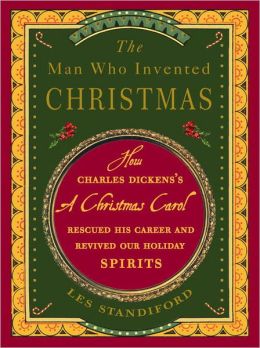
The Man Who Invented Christmas by Les Standiford is filled with fascinating stories about Charles Dickens and the creation of "A Christmas Carol."

********

February 7, 2012 was the 200th anniversary of Charles Dickens' birth and the entire year has been filled with celebrations to commemorate the occasion.  On Dickens' actual birthday in February there were events staged in England and all over the world.  They including public readings, a ceremony at Westminster Abbey and many birthday celebrations.   Newspapers and magazines featured articles by writers, academics and scholars listing the most popular novels by Dickens and their own personal favorites.  "Bleak House" and "Great Expectations" were at the top of most lists.   Claire Tomalin's new biography of Dickens was published this year and a revival of the "Mystery of Edwin Drood" is currently playing on Broadway.  In New York there was an exhibition -- A Tale of Two Centuries: Charles Dickens Turns 200 -- at the Morgan Library which featured the largest collection of Dickens material outside England.

Painting of Charles Dickens from the Morgan exhibition
Image via here

Dickens' signature from the exhibition at the Morgan
Image via here

******** 

But it seems that the best was saved for last.  On December 10 the Charles Dickens Museum at 48 Doughty Street in London, his only surviving London home, reopened after a three year, $5-million  refurbishment and restoration.  It was the home of Charles Dickens from 1837 to 1839 and the site where he wrote "Nicholas Nickleby" and Oliver Twist."  He moved in as a young husband with his new wife, Catherine and their first child.  Two more children would be born while he lived there.  It was the house he lived in when he became famous under his own name, dropping the pseudonym of Boz which he had previously used.  The Dickens museum has been in operation since 1925, but its new facelift is so impressive that it has inspired many people to say that it has gone from "Bleak House" to "Great Expectations."  


The goal was to make it look less like a museum and more like a home, much as it would have looked in Dickens' own lifetime, as if he had just stepped out the door.  For example, in the drawing room, where Dickens regularly entertained his friends with performances from his works, visitors can sit on the sofa and hear the voice of the actor Simon Callow reading his words.  Visitors can see the blue-walled dining room where he entertained his friends; it features the original sideboard and a portrait of the the 25-year-old author.  The master bedroom displays many of his personal items that have never been seen before. The second bedroom where his sister-in-law Mary died at the age of 17 contains rare photographic prints showing the 1856 rail crash which Dickens was involved in.  It has been said that the tragic death of his sister-in-law Mary may have influenced many of the death scenes in Dickens' novels.  On the top floor, the former servants' quarters contains a set of bars from Marshalsea prison, where Dickens' father was imprisoned for his debts.  There is also an exhibition of costumes from Mike Newell's new film adaptation of "Great Expectations." 

The refurbished staircase at the Dickens' museum with a silhouette of Dickens

The dining room

The drawing room

Bars from Marshalsea Prison where Dickens' father was imprisoned

Throughout the month of December the rooms will be traditionally decorated for Christmas and will host many Christmas events.  Mulled wine will be served and live readings of "A Christmas Carol" will take place.  It will be the only London museum open on Christmas Eve and Christmas Day.  How exciting that the restoration of The Charles Dickens museum was finished just in time for Christmas, the time of year memorialized in Dickens' beloved book "A Christmas Carol." 

If you want a treat, go here to hear Charles Dickens' great granddaughter Monica Dickens read "A Christmas Carol."  It will give you goosebumps since it is as close as we can get to hearing the actual author himself.  Monica Dickens first heard the reading from her grandfather, who heard it from Charles Dickens.  Her reading of the famous opening: "Marley was dead: to begin with..."  will give  you a thrill.  

Enjoy!   

Last five photos via here 

The Happy English Home

"Mrs. Allonby: (surveying the room)  It looks quite the happy English home."
--  "A Woman of No Importance,"  Oscar Wilde


Recently I have been traveling to England without getting on an airplane.  When I want to get away to that "green and pleasant land," I just dip into some of my favorite English design books.  They are a dream for the anglophile in me and also inspire me with some great design ideas.  I have always loved the English country style of decoration, probably fueled by all the novels I have read that are set in the English countryside.  This style just exudes coziness and warmth and the rooms that the designers  create make me want to curl up in front of the fire with a book and a cup of tea.


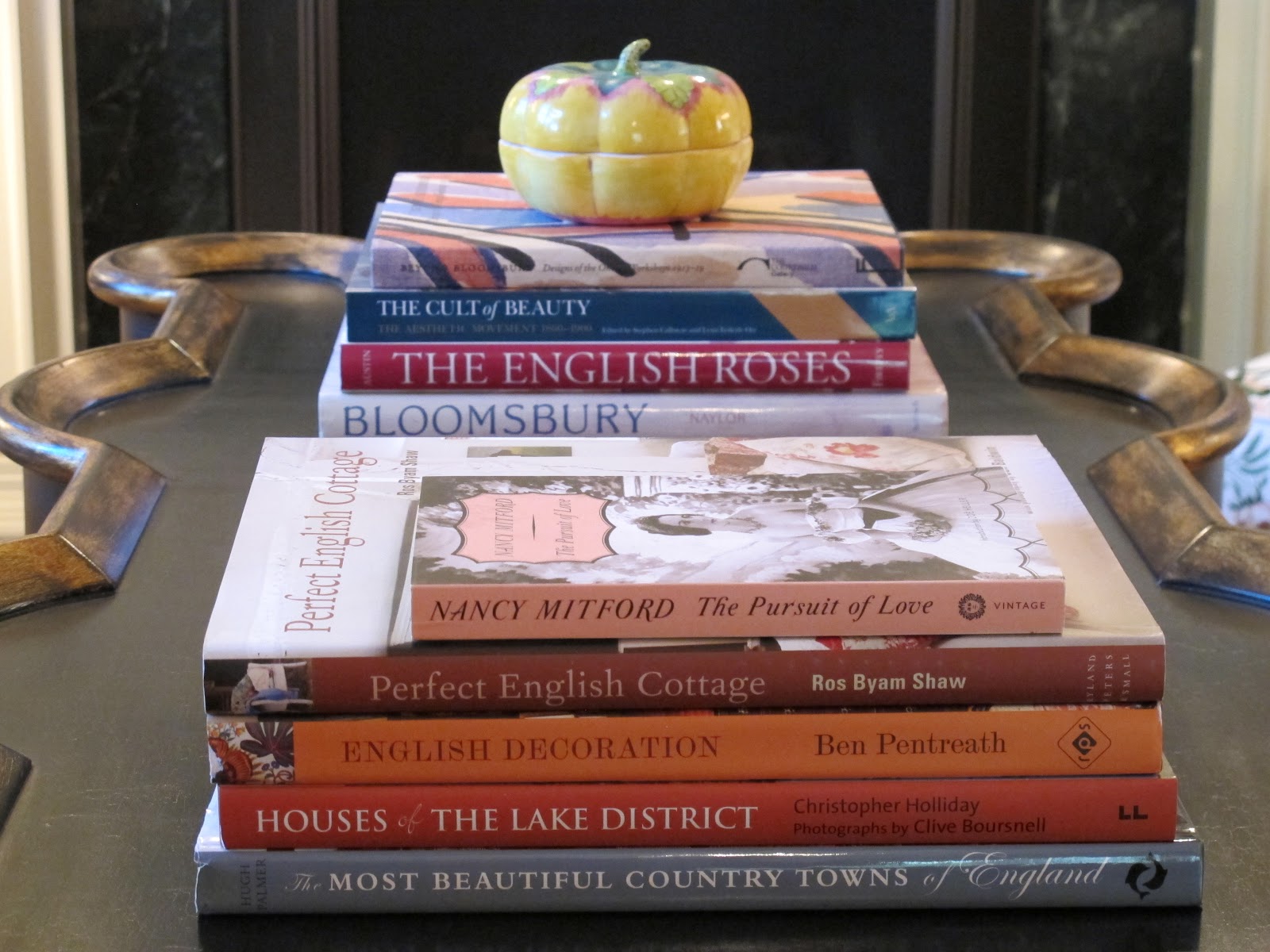
As Ros Byam Shaw writes in Perfect English Cottage:

 "The word 'cottage' is surrounded by a rosy glow.  Add 'English' and the glow becomes a little rosier."

In this charming book devoted to the English cottage look, the author explores many different examples of this style and ways to create the look in your own home.   The book is divided into chapters:  Romance, Character, Holiday, Simplicity, and Elegance.  At the end of each chapter is a list of distinctive elements that create each of these looks. The books takes us on a leisurely journey through the English countryside and inside some of its most charming homes.  Put on the kettle, make yourself a cup of tea, and curl up with this one.  It will have you longing to visit England.


Houses of The Lake District by Christopher Holliday is a sumptuous book about the distinctive houses and castles of Cumbria, England, the area known as the lake district.  As the writer tells us, these homes are inextricably linked to their beautiful and romantic settings.  This is the region of England where the romantic poets lived and wrote, and where the beloved children's book writer and artist Beatrix Potter lived.  The books tells the story of twenty-one of these houses and the people who lived there.  The Lake District has always been on my wish list of places to visit in England and now, because of this wonderful book on its houses and castles, a trip to this region will be about so much more than just the scenery.  The author has written in great detail about the historic and magnificent houses to see in this region, all of which are open to the public.

  
The Most Beautiful Country Towns of England is one of those coffee table books that everyone picks up and reads. For the armchair traveller, it is a journey to some of the most beautiful towns in England.  We travel with the author to places such as Ambleside in Cumberland, Chipping Campden in Gloucestershire, Petworth in West Sussex, Shaftesbury in Dorset, and St. Ives in Cornwall.  These are the locations of so many great English novels and it is transporting to be taken there through this beautiful book that is rich with sumptuous photography.


English Decoration by London-based architect and interior designer Ben Pentreath is a new design book about English inspiration for the contemporary home.  In this book we are given a new survey of the best of English style.  The homes in "English Decoration" include Pentreath's own country house in Dorset, which is called the Parsonage, as well as his lovely and sophisticated flat in London.  He writes in his introduction:

"What is it that gives English rooms such character, so that we can know them as well as people; like them and love them; belong in them; feel at ease in them?"  He goes on to identify the ingredients that make the best English rooms: "light, views, the relationship of one room to the next, and the landscape or city beyond; furniture and rugs; books and lamps; plants and flowers; sounds -- the ticking of a clock, or the deep silence of an old room in the country; and scents -- of garden roses, or woodsmoke.  Or maybe it is the personality of the owner that is strongest, woven into every fibre?"

This book contains many great ideas for incorporating the elements of English decoration into our own homes.  Ben Pentreath has a home decor shop in London which I dream of visiting next time I am there, but in the meantime I spend a lot of time on his gorgeous blog.  It was listed by the Telegraph as one of "The 20 best interiors blogs." Readers of it can keep up with his current design projects and also the new products he is carrying in his store.  There are great photos of his country home and London flat and I am always inspired by what I read there.  


And my imaginary voyage to England would not be complete without reading one of the best novels about an English family living in a big sprawling house in the English countryside.   I have been rereading Nancy Mitfotd's The Pursuit of Love.  In her classic comic novel, Mitford satirized upper-class English idiosyncrasies in her depiction of the eccentric Radlett family.  This is one of my favorite books because it always makes me laugh and it feeds my love of British eccentrics and British wit.  I laughed out loud the other day when I read the following description of Alconleigh, the Radletts' Gloucestershire estate.  The narrator is drawing a comparison between the dark and gloomy house that the Radletts live in and that of a neighbor with whom Linda Radlett is spending a lot of time:

"The two men and indeed their two houses and estates, afforded an absolute contrast.  Alconleigh was a large, ugly, north facing, Georgian house, built with only one intention, that of sheltering, when the weather was too bad to be out of doors, a succession of bucolic squires, their wives, their enormous families, their dogs, their horses, and their unmarried sisters.  There was no attempt at decoration...Within, the keynote, the theme, was death.  Not death of maidens, but the deaths of warriors and of animals, stark, real.  On the walls halberds and pikes and ancient muskets were arranged in crude patterns with the heads of beasts slaughtered...all lying together in a timeless jumble.

Merlinford (the neighbor's estate) nestled in a valley of south-westerly aspect, among orchards and old mellow farmhouses.  It was a villa, built at about the same time as Alconleigh, but by a very different architect, and with a very different end in view.  It was a house to be lived in, not to rush out from all day to kill enemies and animals...It had Angelica Kauffman ceilings, a Chippendale staircase, furniture by Sheraton and Hepplewhite; in the hall there hung two Watteaus; there was no entrenching tool to be seen, nor the head of any animal."


"There is no Frigate like a Book
To take us Lands away,
Nor any Coursers like a Page
Of prancing Poetry."
-- Emily Dickinson

Have you been doing any traveling lately?

If You Happen To Be In England in October...


If you happen to be in England in the month of October, I have discovered a delightful field trip for you.  Especially for those of you who share my passion (obsession?) for Bloomsbury.  On Monday, October 22 Country Living Magazine UK in conjunction with Farrow & Ball is hosting a special day at Charleston in East Sussex, the home and country meeting place for the writers, painters, and intellectuals known as the Bloomsbury Group.  Oh how I wish I could be there!  Charleston is one of my favorite places to visit; it is a house that truly takes you to another time and place, to that era in the early twentieth-century when the bohemian group of artists and writers that included Virginia Woolf, Vanessa Bell, Duncan Grant, Lytton Strachey, and Roger Fry were gathering together to create art and write books -- all different from what had gone before -- in addition to discussing everything under the sun.  Anyone who is interested in art, decoration, gardens or history would love it. Vanessa Bell and Duncan Grant lived there and produced art together for fifty years.  All of their friends hung out there. To visit Charleston is to be transported to the incredibly exciting time of the early twentieth-century when modern art was exploding in Paris and influencing artists in England.   Being there is to understand that creativity was truly the heart and soul of the lives that Vanessa Bell, Duncan Grant and their friends lived on a daily basis.

The Lily Pond Table designed by Roger Fry and painted by Duncan Grant
It is in Maynard Keynes' bedroom at Charleston

The walled garden, the house and its interiors are magical and memorable.  The house is set in a bucolic part of Sussex, surrounded by nature and facing a pond.  The inside is a riot of color and pattern and is decorated with hand painted murals, furniture, mantels, wallpaper, textiles, fabrics, lamp shades, bed frames, and anything else you can think of.  It's an exuberant place, there are flowers and leaves in many of the designs.  These artists were inspired by the beautiful countryside that surrounds the house and the garden was often the subject of paintings done by Vanessa Bell and Duncan Grant.

Charleston has been restored and preserved so that it looks much as it must have looked one hundred years ago when Vanessa and Clive Bell moved in.   The house contains so much history and atmosphere that it feels as if Virginia Woolf might pop in at any minute to visit her sister Vanessa who is probably in the kitchen making her legendary scones for tea.   Duncan Grant may be painting in the garden and Lytton Strachey will most likely be reading in the library.  Maynard Keynes and his new wife the ballerina Lydia Lopokova may drop by to spend the weekend, as his room is always waiting for him.  He was such a frequent guest that he had his own bedroom at Charleston.  It's just above the front door and looks out on the pond.


But back to that field trip on October 22.  This is what Country Living and Farrow & Ball have planned for your day at Charleston.   After enjoying a morning coffee you will hear an informative talk about Charleston by curator Wendy Hitchmough which will be followed by a guided tour through the house and garden.  After a seasonal lunch made with local produce, you will hear a short talk about using color in the home by Joa Studholme, the international color consultant at Farrow & Ball.  After that you can take part in a painting workshop, led by artist Sophie Croyndon, to create your own Charleston-inspired wooden tray.  Doesn't this sound like a perfect day?

New Costume Drama from England


I have just heard some very exciting news for fans of British television.  Are you a fan?  I have been one for as long as I can remember!   A lovely reader from England has written me that a new five- part television series called "Parade's End" starring Benedict Cumberbatch has just begun to air in England. This new mini-series is scheduled to begin here at the end of the year.  It is based on Ford Maddox Ford's quartet of novels "Parade's End" about Britons during the First World War.  Adapted for television by playwright Tom Stoppard, who has also written the screenplay for the upcoming film "Anna Karenina" (can't wait!),  it has an incredible cast which includes Rebecca Hall, Rupert Everett, Miranda Richardson, and Janet McTeer.  Here are some of the luscious images from this new Edwardian mini-series. It looks gorgeous with its English countryside setting and grand country houses; it just may ease our impatience while we wait for "Downton Abbey" to return.

    
After a little research I learned the following about the story:  Benedict Cumberbatch plays Christopher Tietjens, a government statistician from a wealthy family who is serving in the British army during World War I.  While he is away at war his socialite wife Sylvia, played by Rebecca Hall (above), is a  deeply flawed character who seems intent on ruining her husband.  The other main character is a woman with whom Tietjens is in love, a young suffragette named Valentine played by actress Adelaide Clemens.  "Parade's End" is a love story set during the Great War as well as a portrait of British society before, during, and after the war.   It sounds promising.  While waiting for this series to begin, I would love to read the novels by Ford Maddox Ford on which it is based.   


By the way, are you a fan of Benedict Cumberbatch?  I think he is one of the most fascinating actors to watch and loved him in the recent series "Sherlock" on Masterpiece Mystery.  I wrote about it here.   Cumberbatch gave a fabulous performance as Sherlock Holmes which he delivered with humor and intelligence.  I can't wait to see what he does in this new mini-series currently airing in England.   


I am very excited for this one!  It just might be the new "Downton Abbey."

All photos from here

Inspired by "Downton Abbey"


Our favorite television series from England "Downton Abbey" has not been on the air for a few months, but its influence has been huge and its presence continues to linger, especially in some recent magazine articles, photo shoots and fall fashion.  The September issue of Vanity Fair has a piece on actress Jessica Chastain styled as an English duchess and shot in a stately manor house in England's Hampshire countryside. These beautiful photos were taken by renowned photographer Mario Testino.  They are exquisite and conjure up the show as well as paintings by John Singer Sargent and Thomas Gainsborough.  It is not surprising that the opening photo is based on the hunting scene from the final episode of "Downton Abbey's season two,  for who could forget those iconic images from this beautiful show?  If you are a fan of "Downton Abbey," be sure to pick up a copy of the September issue of Vanity Fair; it will remind you of the aesthetic pleasures of this television series from England where every scene looks like a painting.


Photos via here

********

Lady Mary Crawley, our favorite aristocrat from "Downton Abbey," is featured in the September issue of Harper's Bazaar.  The magazine has an article and photo spread on the English actress Michelle Dockery who plays Lady Mary. The interview with her is fabulous, as are these photos of this very modern looking actress.  She has much to say about the show and its popularity.


Photos via here

Here is my favorite quote from the actress  --  "I think period drama can be quite alienating, but 'Downton' isn't.  This is going to sound quite...pretentious, but someone said that it's like a soap written by a poet."  I learned from the interview that Michelle Dockery will be appearing in the film "Anna Karenina" with Keira Knightley, coming out in November and that she will soon be filming "Restless," a BBC television adaptation of the William Boyd novel.  Pick up the magazine to read the entire article.

********

And finally, a peak into the Ralph Lauren collection for fall which was inspired by the English countryside life and sumptuous costumes of "Downton Abbey."  The runway show in the spring opened to the theme music from "Downton."   Take a look at some of Ralph Lauren's designs; don't they capture the romance and nostalgia of the hit period drama?


Photos via here

The third season of "Downton Abbey" will air in the U.S. in January.  While we wait for the next season to begin in January and the Emmy Awards to air in September -- the series is nominated for sixteen awards -- there is no shortage of "Downton Abbey" inspired articles, photography and fashion to enjoy!